
 Collaku Consulting
Get Free Consultation
Reply within 4 hours • Free consultation
Collaku ConsultingReply within 4 hours • Free consultation
Installation of Cattani oil-free dental compressors, sized to chair count and procedure mix. Includes air-treatment, dryer, and noise-control work.
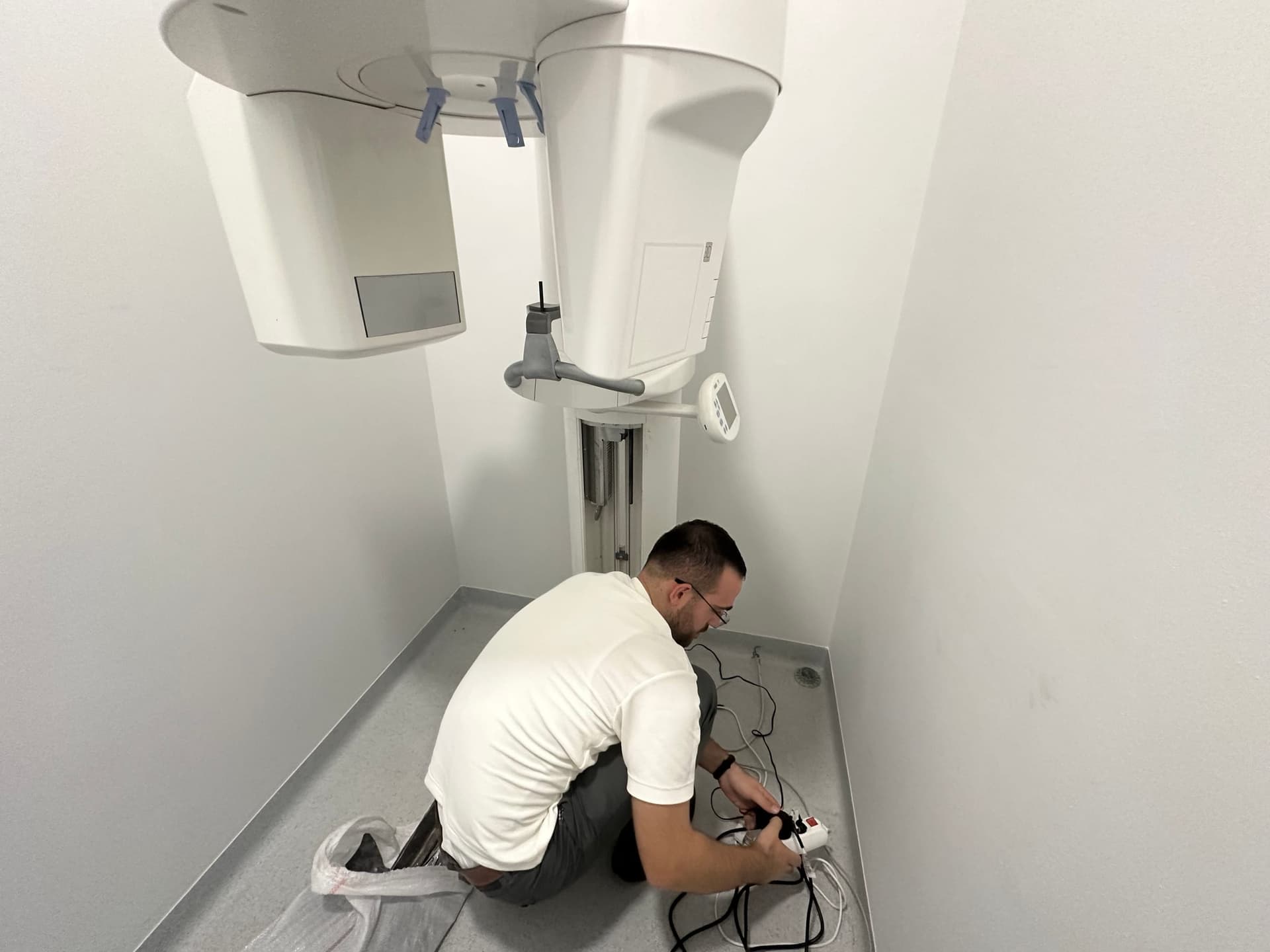
Sizing, placement, plumbing, electrical, and noise control — done as one job so the compressor is ready for the chairs the day commissioning is signed off.
Cattani oil-free units only. Dental delivery air must be oil-free at the chair — oil aerosol contaminates handpieces, fouls turbine bearings, and is a patient-safety issue. Cattani uses dry compression with PTFE piston rings, no lubricant in the compression chamber.
Anti-vibration mounts under the unit, flexible couplings on the air line at the compressor, and acoustic enclosure or treated plant room when the compressor sits near treatment areas. Typical Cattani units run at 65-72 dB at 1m; a treated plant room drops what reaches the operatory below 50 dB.
Refrigerant or membrane dryer matched to your flow rate, coalescing and particulate filters, and an automatic condensate drain. Dew-point target is below ambient at the chair so no liquid water reaches the handpieces.
Compressors throw heat. The plant room needs intake and exhaust ventilation sized to the unit kW; without it the compressor cycles short and trips on thermal cut-out in summer. We size the louvers and, where needed, add an extract fan with a thermostat.
How this same expertise plays out on a real dental clinic project.
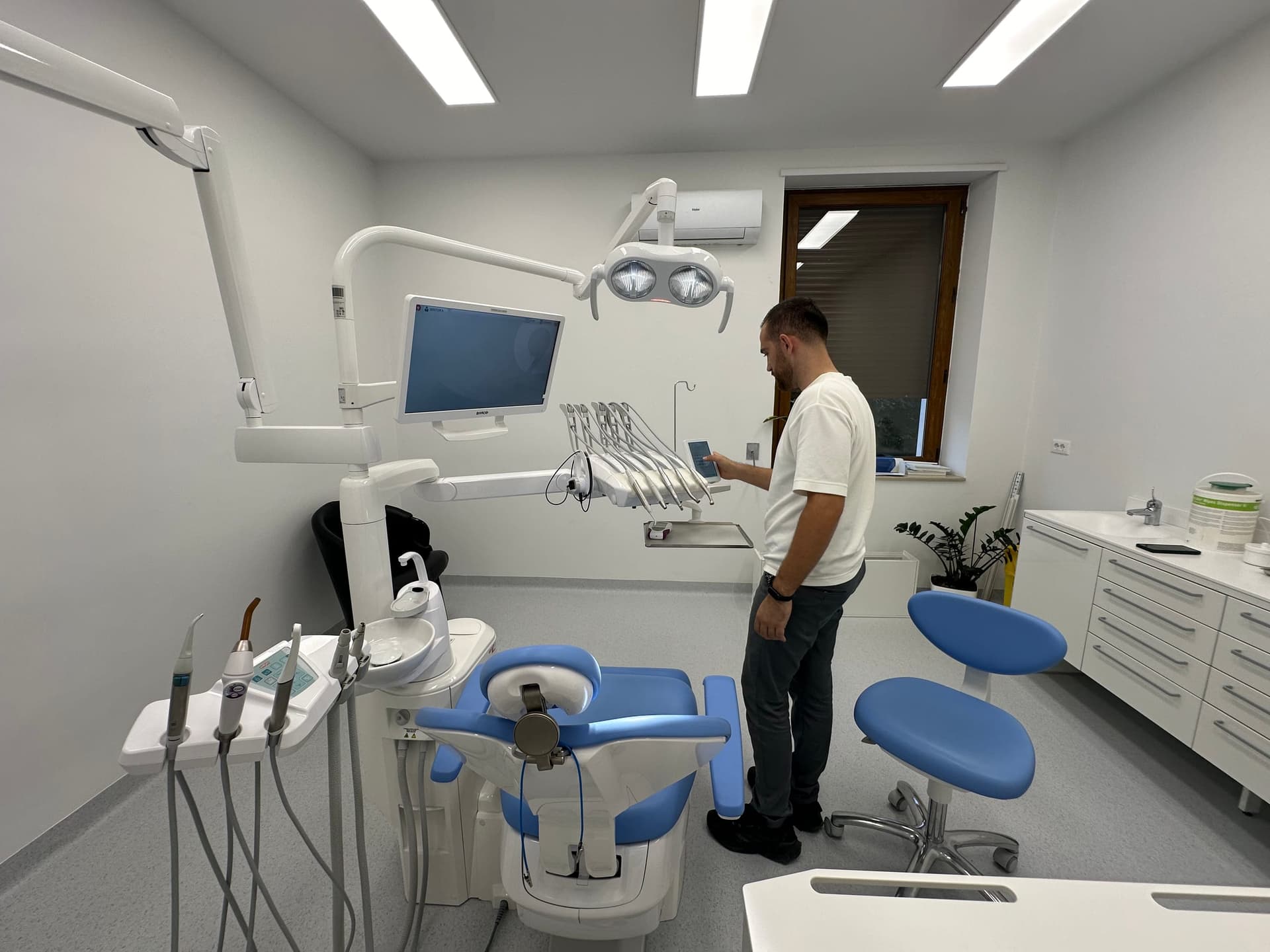
Recent articles on dental practice design, equipment and patient flow.
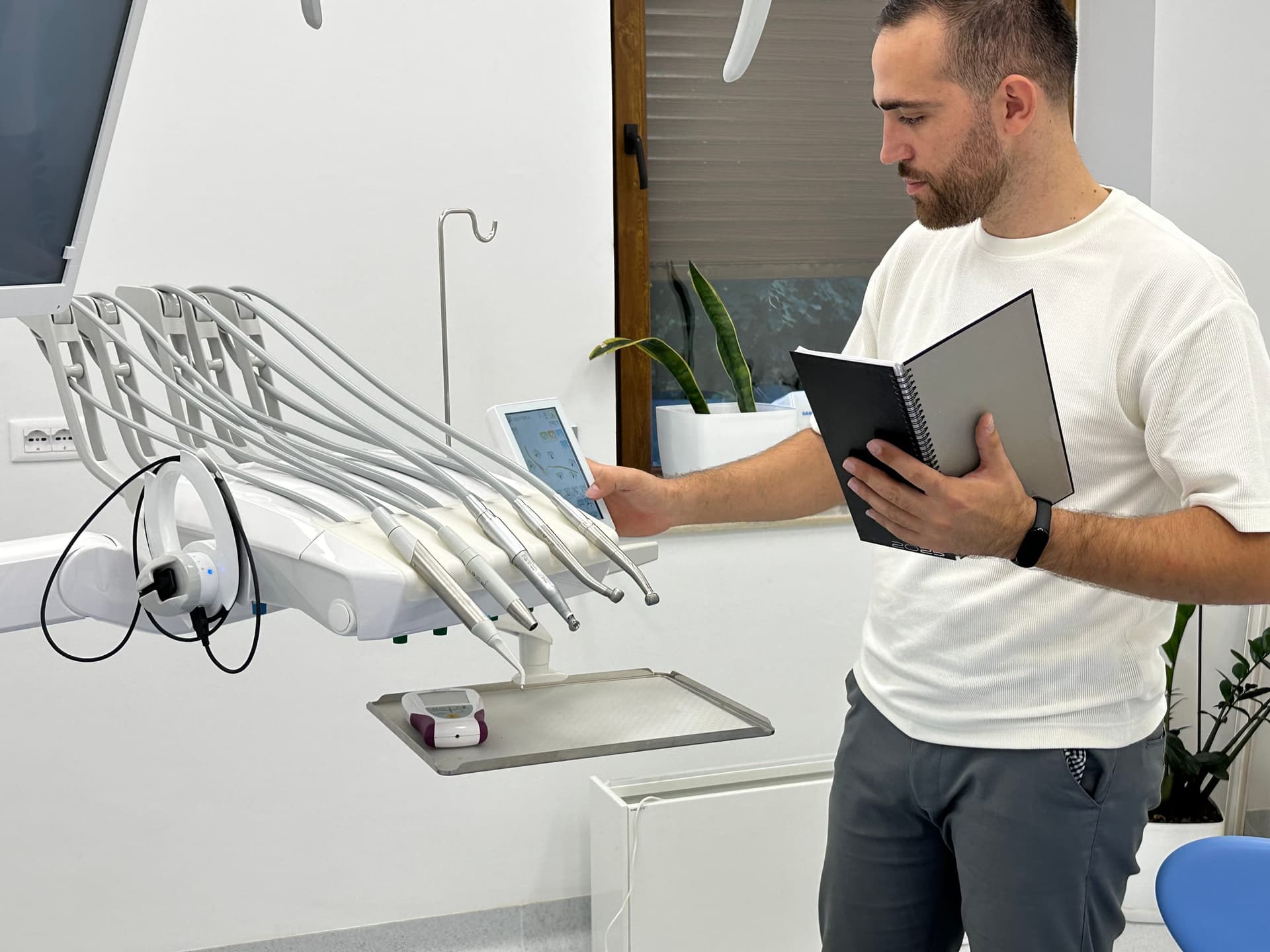
How cutting-edge design trends are transforming dental practices, improving patient outcomes, and boosting clinic efficiency through 2026.
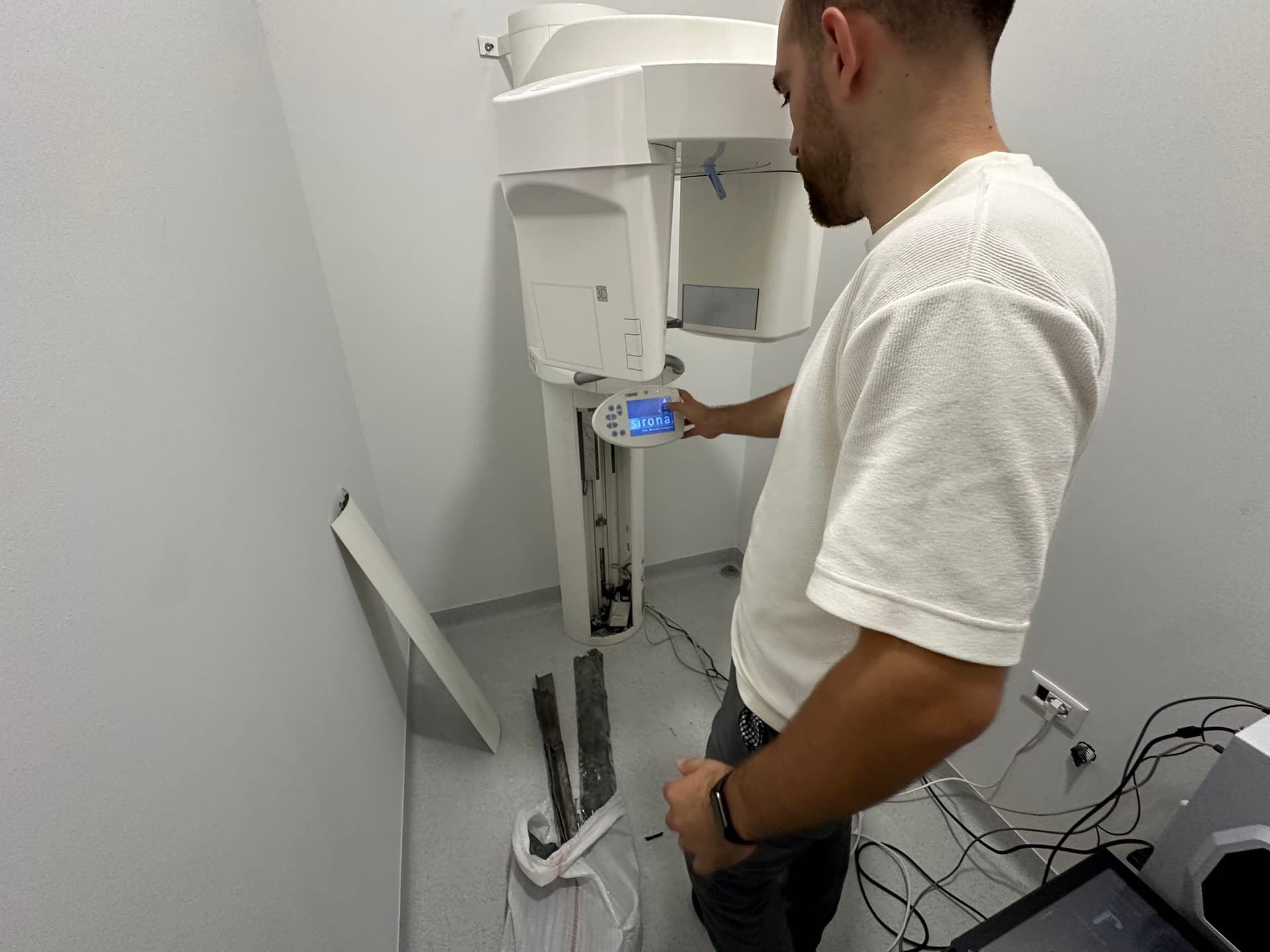
How thoughtful design choices can significantly improve patient satisfaction and reduce dental anxiety.
Site survey, infrastructure prep, install, commissioning, handover. A typical single-compressor install is one working day on site after the prep work is done.
Walk the proposed plant room: floor area, ventilation paths, distance and rise to the chairs, electrical supply, and noise transmission to neighboring spaces. Calculate flow demand from chair count and procedure mix, then specify the Cattani model that fits.
Concrete pad or anti-vibration plinth, electrical supply with a dedicated circuit and isolator, copper or properly rated polymer air line to the chairs with shut-off valves, and ventilation openings cut and louvered.
Compressor positioned on isolators, dryer and filter bank plumbed in, condensate drain piped to a separator, electrical connection terminated, and air line tied into the existing distribution. Pressure-test the new pipework before pressurizing the chairs.
Pressure setpoints adjusted, flow tested at each chair, dew-point checked at the dryer outlet, noise level measured in the operatory, and a leak survey on the new pipework. Anything outside spec is corrected on the day.
Walkthrough with your team: how to read the gauges, when to drain the receiver if it is not on auto-drain, what the alarms mean, and the maintenance interval. You get the install file, manuals, warranty registration, and a service-due reminder.
Practical answers on oil-free compression, noise, maintenance, and sizing.
Other services often booked alongside this one.
Book a consultation and we'll get back to you within 4 hours.